Friday, April 20, 2007

Inspiration

I used to live and report in Sonoma County, which has some awesome farms and food. Here are some articles I wrote about food and gardening:

Market to table
I made a dinner for four made from ingredients bought at the Sebastopol Farmers Market (and a few things from my garden).

Cooking with wild mushrooms
A year into my obsession with mushrooms, I interviewed local mushroom gurus about their favorite ways to cook up the elusive wild mushroom.

Making compost
One of the articles I wrote from my permaculture training at OAEC, I talked with the experts on turning trash into treasure.

Not just thistling, Dixie
On the importance of battling invasive thistles.

Making sushi
You're probably not growing the ingredients, but oh so tasty. Mmm... raw fish.

Making mead
If you raise bees (and don't we all love an endangered species), you should know how to make mead, honey wine.

OAEC's biodiversity tasting
I've been to two of these marvelous events so far, and found some of my favorite things to grow there. When I went they had a dozen different tomatoes, eight different basil pestos (my favorite was cinnamon basil - amazing depth of flavor. We're growing two dozen of them this year), six sauteed greens (my fave: magenta lambsquarters), herb water, 10 different garlics and an extravagantely diverse salad. They haven't announced one yet for 2007, but if you get on their mailing list, they'll let you know.

Sebanana
Just to show it's possible, Sebastopol man grows bananas. Commercially.

Raising rabbits for food
Both vegans and meat-eaters in denial about where their meat comes from were horrified at my description of a small rabbit-raising operation. But it's the most ethical meat I've ever eaten. Also delicious.

Monte Rio school garden
And because school gardens are the coolest and most important thing ever, Monte Rio School grows its own salad! Yeah!

Labels: , ,

Tuesday, April 17, 2007

What's this?

I believe in local food. Like many Bay Area progressive foodies, I worship at the table of Michael Pollan, Sustainable Table and eating local.

Locally grown food has many advantages. If you visit the farm, you see what the farmer is doing to your food. No worries about CAFOs, fertilization with dangerous products or other perils. You'll have the truth in front of you, as well as inside of you. A relationship with a trustworthy farmer is a beautiful thing indeed. And delicious.

But who can you trust more than yourself? And who knows what you like to eat better than you? If you garden instead of shop (well, you won't be able to get away from going to the grocery store. Growing enough grain for yourself is nearly a full-time job, even if you're growing quinoa), your food will require much less shipping, be more fresh and thus nutritious, and be exactly what you want. Plant what you love to eat, and it will grow.

If you want to really reduce your ecological footprint (besides ditching your car and never riding an airplane), reduce the amount of food you throw away. If you harvest your food when you eat it, you won't waste much. And so tasty!

Before you sheet mulch your lawn and start planting, first you need to figure out what you eat. I always tell people to grow herbs first. With herbs, a little goes a long way, they're pretty insect resistant and don't need excellent soil. Then grow salad greens. Then, if you still have room, time and energy grow strawberries. *Nothing* beats a just-picked, homegrown strawberry, warm from the sun. *runs outside to check if strawberries are ripe yet. no. damn*

But your priorities are going to be different. Maybe you hate strawberries, never cook with herbs and are allergic to salad. Maybe a whole bed of brussels sprouts is what does it for you. My neighbors only grow mustard greens and rice (which they never harvest, oddly enough).

Pre-planning
Step 1: Figure out what you eat. This should be easy.
Step 2: Figure out what of 1 you can grow given your situation (climate, sunlight, space, time and energy). This will require some research.
Step 3: Subtract 2 from 1. This will yield what you should grow.

Now you can start sheet mulching your lawn. I recommend refrigerator boxes.

Labels: , ,

Tasty herb spiral

One of the best choices you can make for growing food, particularly in a very limited space, is herbs. With just a few feet of bed space, you can grow all the herbs you'll need. Imagine never having sage going bad in your crisper - ever again. When you need an herb, you just pick it. No pesticides, no shipping, no trips to the grocery store.

An herb spiral is a particularly fun way to grow lots of herbs. You'll need a space about three feet on each side, lots of differently sized rocks, fill dirt, garden soil and fine mulch. Plus your plants and seeds.

We have a garden bed that gets full sun until about 2 p.m. and ends right at the foot of the kitchen stairway. Now, here's how we did it:

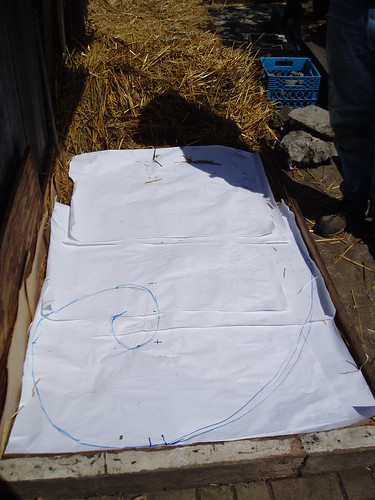
Here is the space, with an ideal Fibonacci spiral drawn for our guide.
Spiral

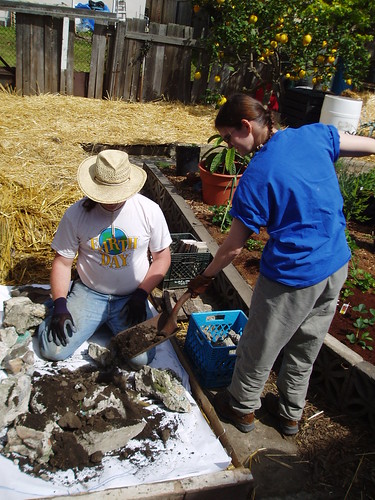
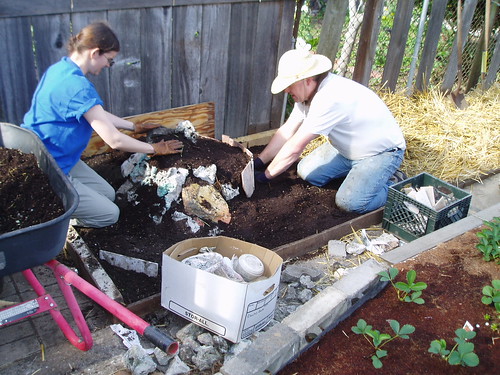
With a vast quantity of urbanite (salvaged concrete pieces) and clay soil we'd excavated nearby, we built the basic mound.
Make a mound

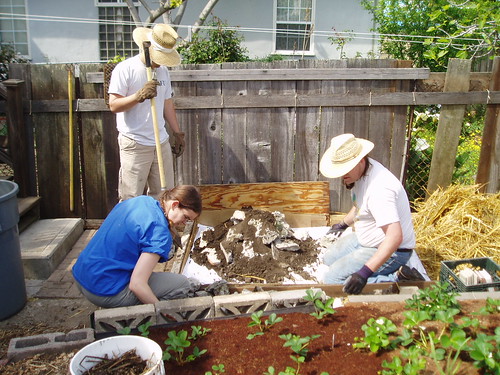
And built.
Building

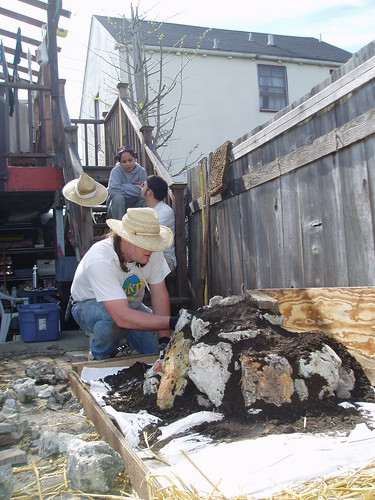
It can take some work to get the shape right.
the engineer in the hat

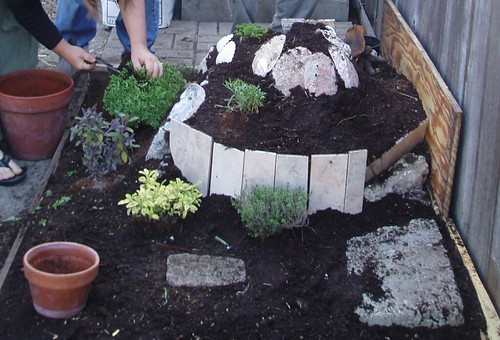
Then we could add soil.
Adding soil

And plants. We planted parsley, purple sage, variegated sage, thyme, lemon thyme, oregano, tarragon and chives, then seeded cilantro, dill, caraway, more parsley, garlic chives and arugula.
Plants

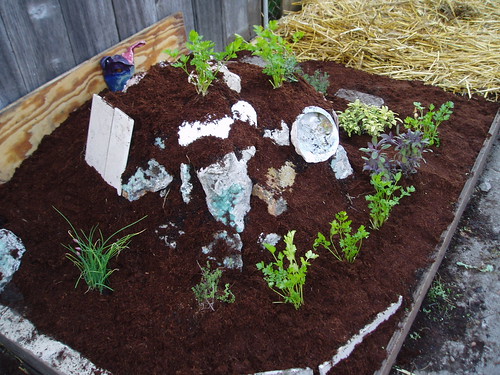
Then we mulched with coconut pith and patted the last details into shape. And it was done.
Herb spiral

This is just one example. Your herb spiral will reflect your unique culinary and artistic sensibilities, as well as the materials on hand. When you decide where to plant your herbs, remember that the different parts of the circle will have different microclimates (really micro). For example, the north side will be shady, so it's a good place to plant annual herbs that tend to bolt (flower prematurely), like cilantro and basil. The south side is for ferocious sun lovers like sage. If you plant perennials like rosemary and marjoram that tend to bush out, make sure to keep them pruned down, or they'll take over the whole spiral.

Remember: don't bother planting herbs that you don't like, even if you already have them or they're easy to grow. If you won't eat it, don't grow it. Save the space for something you will eat.

We're also planning to install drip irrigation, when we do the rest of the garden. It saves time, energy and water. But I'll still be out there every day, harvesting, weeding (well, less and less weeding now that we have everything sheet mulched) and tending the plants.

Labels: , ,